
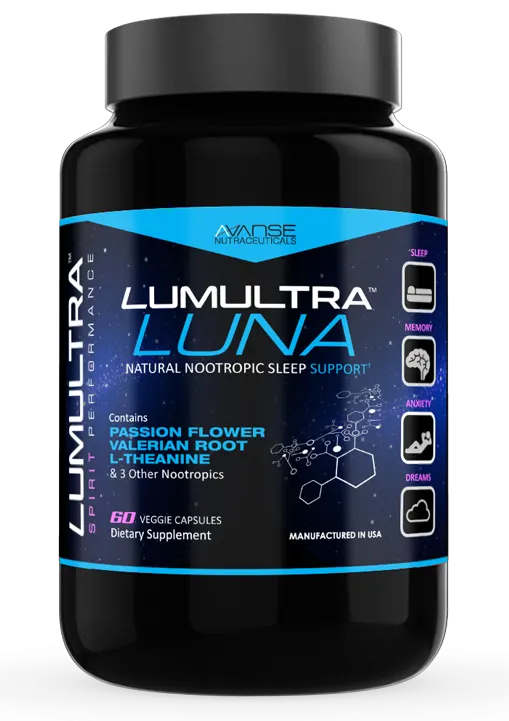
Better Sleep, Better Mood, Better Focus.
In today’s fast-paced, always-on world, sleep has become a luxury for many. According to the CDC, 1 in 3 adults don’t get enough sleep. The consequences? Poor mental performance, low immunity, irritability, weight gain, and even increased risk of chronic illness. While some turn to over-the-counter aids or prescription medications, these solutions often come with side effects and dependency risks.
That’s why more people are turning to natural sleep supplements. And among them, Lumultra Luna stands out as a potent, non-habit forming, and research-backed option designed to help you fall asleep faster, stay asleep longer, and wake up refreshed.
What is Lumultra Luna?
Luna is a premium sleep aid developed by Lumultra, a leader in cognitive enhancement and wellness supplements. Unlike synthetic sleep medications, Luna blends ancient herbal wisdom with modern science, combining powerful botanicals and minerals to support a full night’s rest naturally .
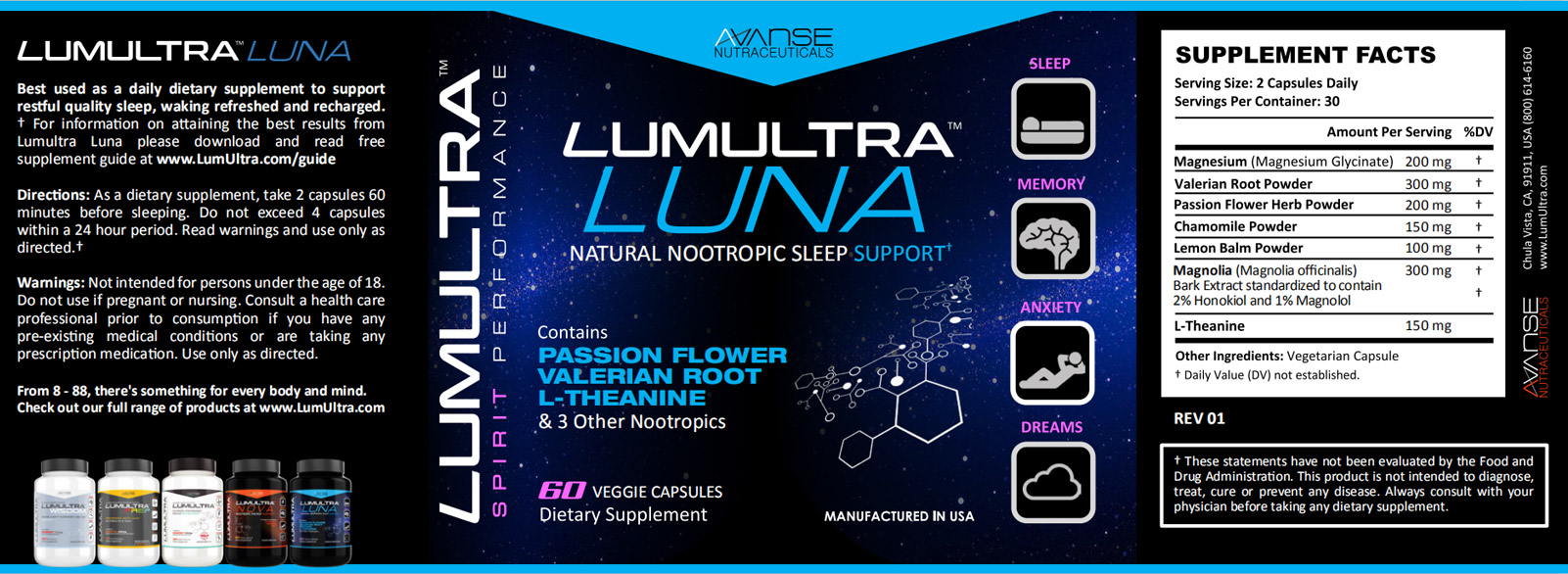
Luna’s Powerful Ingredients and Their Benefits
1. Passion Flower Herb (200 mg)
Used for centuries in herbal medicine, Passion Flower is known for its calming effects. It helps reduce anxiety and promote relaxation by increasing gamma-aminobutyric acid (GABA) levels in the brain.
2. Chamomile (150 mg)
Chamomile is one of the most popular natural remedies for insomnia and anxiety. It contains apigenin, an antioxidant that binds to certain receptors in the brain to induce sleepiness and reduce insomnia.
3. Lemon Balm Powder (100 mg)
This citrus-scented herb from the mint family is known to reduce restlessness and promote tranquility, especially when combined with other calming herbs.
4. Magnolia Bark (300 mg)
Packed with the active compounds magnolol and honokiol, Magnolia Bark is known for reducing anxiety, promoting relaxation, and supporting sleep cycles without next-day drowsiness.
5. Valerian Root (300 mg)
A powerhouse sleep aid, Valerian Root supports faster sleep onset and improved sleep quality. It has shown to increase GABA levels and reduce the time it takes to fall asleep .
6. Magnesium Glycinate (200 mg)
This bioavailable form of magnesium is a favorite among natural health practitioners. It supports neurotransmitter function, calms the nervous system, and enhances sleep efficiency.
7. L-Theanine (150 mg)
Derived from green tea, L-Theanine promotes relaxation without sedation. It also supports focus and a sense of calm, making it easier to wind down at night.
Why Choose Luna? The Advantages Over Other Sleep Aids
- Non-Habit Forming: Unlike melatonin or prescription drugs, Luna doesn’t create dependency.
- No Morning Grogginess: Wake up feeling refreshed and alert.
- 100% Transparent Label: Every ingredient and dosage is listed.
- Clinically Effective Doses: No fillers, no fluff—just high-quality compounds.
- Backed by Real Data: Rated 2.30/3 for effectiveness on SupplementDatabase.com.
What the Experts Say
Luna receives praise not only from users but also from supplement analysts. SupplementDatabase.com highlights Luna for its high effectiveness, full transparency, and absence of any ineffective ingredients. Compared to many leading supplements, Luna ranks higher in terms of ingredient synergy and dosage accuracy (supplementdatabase.com).
What Customers Are Saying
“I’ve tried everything from prescription meds to meditation. Luna is the only thing that’s consistently worked without giving me a foggy head the next day.” (lumultra.com)
“Luna is my go-to after long, stressful days. Within 30 minutes, I’m ready for deep, uninterrupted sleep.” (amazon.com)
“What I love most is how natural it feels. It doesn’t knock me out but eases me into sleep so gently.” (reddit.com)
“Perfect for frequent flyers like me. I’ve struggled with time zone changes for years—Luna finally gave me a way to recalibrate.” (lumultra.com)
“My therapist recommended I try a non-melatonin supplement. I found Luna and haven’t looked back. It’s part of my nightly ritual now.” (lumultra.com)
“I’ve tried melatonin and other natural supplements, but Luna helped me fall asleep faster and stay asleep. No grogginess in the morning. It’s a game-changer.” (amazon.com)
“As someone who struggles with anxiety-induced insomnia, I’m thrilled to have found Luna. It works gently, and I sleep like a baby.” (reddit.com)
“The ingredient list speaks for itself. Everything is natural and dosed effectively.”
“I noticed a difference within the first three nights. My mind wasn’t racing, and I woke up feeling mentally clear for the first time in months.” (lumultra.com)
“It’s rare that something lives up to the hype, but Luna really delivers. I travel a lot for work and this helps me reset quickly.” (lumultra.com)
“This isn’t like popping melatonin and crashing. It’s more like a gentle glide into sleep. Subtle, smooth, and powerful.” (amazon.com)
“Even my partner noticed the difference. I’m sleeping through the night and snoring less. Total win.” (reddit.com)
“The blend of ingredients makes me feel like this is finally something sustainable. Not just a quick fix.” (lumultra.com) “I’ve tried melatonin and other natural supplements, but Luna helped me fall asleep faster and stay asleep. No grogginess in the morning. It’s a game-changer.” (amazon.com)
“As someone who struggles with anxiety-induced insomnia, I’m thrilled to have found Luna. It works gently, and I sleep like a baby.” (reddit.com)
“The ingredient list speaks for itself. Everything is natural and dosed effectively.”
How Luna Works: The Science Behind the Sleep
Luna targets multiple sleep disruptors simultaneously:
- Here’s a complete breakdown of Luna—Lumultra’s sleep‑support formula—and how effective it appears to be:
🌿 Ingredients & Purported Benefits
Passion Flower Herb (200 mg)
Traditionally used to alleviate insomnia, anxiety, and nervous exhaustion.
Chamomile (150 mg)
Used in folk medicine to calm an overactive mind and ease into sleep .
Lemon Balm Powder (100 mg)
Helps reduce restlessness and tension .
Magnolia Bark (300 mg)
Contains magnolol and honokiol, linked to reduced stress, anxiety relief, and enhanced sleep.
Valerian Root (300 mg)
Often used to support sleep onset and quality.
Magnesium Glycinate (200 mg)
One of the most bioavailable forms of magnesium, known to promote relaxation.
L‑Theanine (150 mg)
An amino acid that promotes calm without drowsiness—and may support immunity.
Efficacy Overview
SupplementDatabase.com scores Luna highly:
Effectiveness Rating: 2.30 / 3 (indicating strong efficacy)
Transparency: 100% (all ingredient dosages listed)
No ineffective ingredients listed (Straight Health).
Comparisons with other products (e.g. The Pre):
Luna had more “extremely effective” compounds (2 vs 1)
No filler or ineffective ingredients—unlike some competitors (Straight Health).
User feedback (Amazon review):
“At least as effective as melatonin or valerian root alone at helping you fall asleep.” (Reddit, Amazon).
Marketing claims:
Non‑habit forming, reduces stress and anxiety, improves mental clarity post‑sleep (Milled).
Product
Assessment
Formula strength
Contains multiple well‑researched, sleep‑promoting botanicals in solid doses
Transparency
100%: every ingredient and dosage is listed
Clinical support
Mixed evidence: passionflower, valerian, chamomile, and magnesium are supported; lesser research for magnolia, but promising
Reliability
Highly rated in expert comparisons; positive user reviews
Who Is Luna For?
- High-achieving professionals and entrepreneurs seeking cognitive recovery through restful sleep
- Women balancing emotional, relational, and career demands who crave nighttime restoration
- Those focused on self-mastery, social dynamics, and emotional intelligence
- Busy parents and caregivers needing non-habit forming relief from sleep disruption
- Jetsetters and digital nomads seeking a reliable solution to beat time zone fatigue
- Students and creatives under performance pressure needing mental clarity through quality rest
Common Questions About Luna
A: Yes. Luna is designed for long-term use without building tolerance.
A: Most users report waking up refreshed without any hangover effect.
A: Generally, yes. But consult your doctor if you’re on medication.
A: Many users feel the effects within the first few nights.
Where to Buy and How to Get Started
Luna is available directly from the official Lumultra website. Shipping is fast, and every order is backed by a 90-day satisfaction guarantee.
Order Luna Now and Sleep Deep Tonight
Final Thoughts: Sleep the Way Nature Intended
If you’ve tried melatonin, sleeping pills, or sleep hacks and still struggle with rest, You have two options.
Option One: You pick up the phone and and do whatever you have to do to have a designated cuddle buddy at night.
Option two: You order Lumultra Luna and get high quality sleep night after night where your not worry about the next person’s mess because your dreams are sweeter then your reality.
Dreaming is truly believing and many people have realized it and have came to terms with the awesome power behind this all natural blend. Luna brings together the best of herbal medicine and nutritional science to help you fall asleep naturally, sleep deeply, and wake up ready for the day
Important Disclaimer
Lumultra Luna is a dietary supplement intended to support natural sleep patterns. It is not a substitute for professional medical advice or treatment. Always consult with your physician if you have any existing health conditions or are taking medication. This article is part of a commissioned advertisement and may include promotional language.
Special Offer
Use coupon code H69O at checkout to get 10% off your first purchase. Try Luna tonight and see the difference. Luna brings together the best of herbal medicine and nutritional science to help you fall asleep naturally, sleep deeply, and wake up ready for the day.
You deserve great sleep. Let Luna help you get there.
Love can be a beautiful, freeing experience but sometimes, what looks like care is actually control dressed in a clever disguise. In the beginning, it might feel like your partner is just “invested” or “protective.” They want to know where you are, who you’re with, and how you spend your time. At first, it can seem sweet, even flattering. But when curiosity turns into surveillance, and when concern turns into command, you might be dealing with something more dangerous: a control freak.
Controlling behaviors in relationships aren’t always loud or obvious. They can sneak in quietly, like vines wrapping themselves around your freedom, tightening slowly until you realize you can’t move the way you used to. Sometimes, it’s in the way they manage your schedule, or in the subtle guilt trips when you make your own decisions. Other times, it’s in the way they handle your finances or control your social circles. The common thread? Your autonomy starts to disappear.
This blog will walk you through the most common types of control freaks you may encounter in a relationship. We’ll break down their specific traits, the warning signs, and how each personality operates. Recognizing these patterns early can save you from emotional exhaustion, strained friendships, and lost confidence. Let’s get into the profiles of these controlling personalities so you can spot them before they take the wheel in your life.
The Micromanager

The Micromanager often presents as the “planner” in the relationship. They want things done a certain way, usually their way, and they have a hard time trusting you to handle the small stuff. At first, it might seem like they’re just detail-oriented, but over time, their need for control creeps into every corner of your life. They want to know what you’re wearing, how you arrange your day, and sometimes even how you load the dishwasher.
Their language sounds like:
“Did you really need to buy that today?”
“Why didn’t you tell me you were going there?”
“I think I should handle this part for you.”
The problem with Micromanagers is that their control is often disguised as “helping.” They rarely see themselves as overbearing. They believe they’re doing what’s best for you. But in truth, what they’re doing is systematically chipping away at your independence, sometimes so gradually that you don’t realize it until you start second-guessing your own choices.

The Gaslighter
The Gaslighter is a master of confusion. They will twist words, deny conversations you know you’ve had, and make you question your memory, your feelings, and even your reality. Gaslighting is not always aggressive, it can come wrapped in calm, persuasive tones that make you doubt yourself even more.
Their language sounds like:
“You’re imagining things.”
“You’re being too sensitive.”
“That never happened…you must be stressed.”
When you’re with a Gaslighter, you may start to feel like you’re losing your grip on what’s true. The more you challenge them, the more they make you feel unstable. It’s an exhausting cycle where you’re constantly trying to prove what you know, only to have your words and experiences dismissed or rewritten. Over time, this erodes your self-trust and can make you dependent on them for “clarity”—the very clarity they are robbing from you.
The Jealous Guard

The Jealous Guard doesn’t just want your love, they want your world to revolve around them. They often mask their control as intense loyalty or protection, but their real mission is to isolate you. They feel threatened by your friends, your family, your colleagues, and sometimes even by strangers you barely notice.
Their language sounds like:
“I don’t like when you hang out with them, it makes me uncomfortable.”
“Why do you need to go out? Isn’t spending time with me enough?”
“People are just trying to get between us.”
Jealous Guards slowly cut off your access to outside support. They will guilt you for spending time away from them, question your loyalty, and may even frame your independence as betrayal. The danger here is that the more isolated you become, the harder it is to leave, and the easier it is for them to maintain control.
The Emotional Puppeteer

The Emotional Puppeteer doesn’t use direct commands, they use your feelings against you. Their power comes from emotional manipulation: guilt trips, silent treatments, sudden love-bombing, or strategic withdrawal. They keep you guessing. You’ll find yourself working overtime to keep them happy because their affection feels conditional.
Their language sounds like:
“I guess you don’t care about me as much as I thought.”
“If you really loved me, you’d stay.”
“I was fine until you ruined my day.”
The Emotional Puppeteer knows exactly how to push your emotional buttons, and they thrive on your reactions. They’ll switch from sweet to distant in a heartbeat, keeping you hooked and anxious to regain their approval. Over time, you can start mistaking the highs and lows for passion, but really, you’re stuck in a loop of emotional control.
The Passive Controller

The Passive Controller may seem easygoing at first. They don’t bark orders or set strict rules, but their control shows up in subtle, guilt-laced ways. They sulk when you make independent choices, offer backhanded compliments, and frequently withdraw when they don’t get their way.
Their language sounds like:
“It’s fine. I’ll just go alone.”
“No, I’m not upset… it’s nothing.”
“Do whatever you want. I don’t really matter.”
The Passive Controller uses silence and guilt like invisible ropes to guide your behavior. They may never raise their voice, but they manipulate through emotional pressure, making you feel responsible for their moods. The worst part? You’ll often find yourself apologizing, even when you’ve done nothing wrong.
The Financial Gatekeeper

Money becomes a tool for control in the hands of the Financial Gatekeeper. They may track every purchase you make, restrict your access to shared finances, or make financial decisions without your input. Control over money can quickly translate into control over your freedom.
Their language sounds like:
“Why did you spend that? You need to ask me first.”
“I’ll handle the bills—you’re not good with money.”
“Do you really need to work? I can provide for both of us.”
On the surface, the Financial Gatekeeper may seem like they’re being responsible or protective, but they’re building a system where you’re financially dependent on them. When someone controls the purse strings, they can also start controlling where you go, who you see, and how you live.
The Rule Maker

The Rule Maker sets the relationship on a rigid track. There are rules about what you can wear, who you can talk to, how you spend your weekends, and sometimes even what you post on social media. They mask their demands as “relationship standards,” but what they’re really enforcing is ownership.
Their language sounds like:
“I don’t want you wearing that—it’s too revealing.”
“I expect you to call me every time you get home.”
“I don’t think people in relationships should have opposite-sex friends.”
The Rule Maker believes that love comes with obedience. They treat boundaries like conditions and expect you to shape your life to fit their comfort zone. Over time, this can cause you to shrink yourself just to maintain peace.
The Surveillance Addict

The Surveillance Addict never trusts, they verify. Constantly. They check your phone, demand your passwords, track your location, and monitor your social media like it’s their full-time job. Their excuse? “If you have nothing to hide, this shouldn’t bother you.”
Their language sounds like:
“Let me see your phone.”
“Why didn’t you answer right away? Where were you really?”
“Send me your location so I know you’re safe.”
The Surveillance Addict turns love into a security system. What may start as “checking in” quickly escalates into privacy invasions that chip away at your sense of personal space. Trust is replaced by interrogation, and you begin to feel like you’re always being watched.
Reflection & Moving Forward

The thread that ties all these control freaks together is the quiet removal of your freedom. It’s not always loud. It’s not always violent. Sometimes it looks like love, sounds like care, and feels like loyalty—but at its core, control is about power, not partnership.
When someone limits your choices, silences your voice, or makes you doubt your instincts, you’re not in a relationship, you’re in a system. And systems can trap you if you don’t notice the pattern early.
Ask yourself:
- Do I feel free in this relationship?
- Am I allowed to make my own decisions without guilt?
- Do I trust myself, or do I only trust what they tell me?
If any of your answers gave you pause, this is your sign to re-evaluate what you’re calling love.
Want to Go Deeper?
👉 Check out our Rejection Resilience Toolkit to help you rebuild your boundaries, sharpen your emotional intelligence, and learn the art of strategic detachment.
👉 Follow our #ControlFreaks Series on Instagram for daily scenarios, polls, and real-world red flags you can learn from.
👉 Join the conversation: Share your story in the comments. You never know who you might empower.
Quick Questions about Control Freaks
Below are some common clarity questions about the topic discussed.
A: Early signs include excessive texting, monitoring your schedule, making decisions for you, isolating you from friends, and subtle guilt trips when you assert independence.
A: Yes. Some people control out of fear, insecurity, or learned behavior. While the intent may not always be malicious, the impact is still harmful and needs to be addressed.
A: Healthy boundaries are mutually agreed upon and protect both people. Control removes choice, feels one-sided, and often limits your freedom without your full consent.
A: Change is possible, but only if they recognize their behavior and actively work on it. Therapy, accountability, and consistent effort are usually required. Love alone will not fix control issues.
A: Jealousy can be normal in small doses, but when it turns into monitoring, accusations, or isolation, it becomes a controlling tactic, not just an emotional reaction.
A: Start documenting incidents, noting how they make you feel, and talk to trusted friends or professionals. Emotional manipulation often feels vague—writing things down can help you see patterns clearly.
A: Both men and women can be controlling. It’s not gender-specific. Control is a behavioral issue, not a male or female trait.
A: It depends on the tone, frequency, and motive. Occasional check-ins can be caring. Constant tracking, interrogations, or demands to share your location can cross into control.
A: Yes. Financial control can also show up as discouraging your career goals, belittling your income, or making you feel incapable of managing money—even if accounts are separate.
A: Concern seeks to support you; control seeks to restrict you. Concern invites dialogue; control pushes decisions on you.
A: Gaslighting erodes your confidence by making you doubt your memory, judgment, and emotional responses. Over time, it can make you dependent on your partner’s version of reality.
A: Start with clear, calm communication about what you need. Reinforce your boundaries consistently. If they repeatedly violate them, it may be time to step back or seek outside help.
A: Not necessarily. It becomes a red flag when it’s demanded, monitored, or used to control your communication. Trust should never require surveillance.
A: Emotional attachment, fear of being alone, low self-esteem, financial dependence, or the hope that things will improve can all keep people stuck in controlling dynamics.
A: Reach out to trusted friends, family, therapists, or relationship hotlines. You are not alone, and there are people trained to help you safely evaluate your situation and plan your next steps.